
Key Takeaways:
- Market volatility is normal, but emotional reactions are what most often damage long-term investment outcomes.
- Fear-driven headlines amplify anxiety but rarely reflect the true long-term direction of markets.
- A clear investment plan provides stability and guidance when emotions threaten disciplined decision-making.
- Your time horizon determines whether short-term market declines actually matter to your financial goals.
- Loss aversion causes investors to overreact to downturns and abandon strategies that usually work.
Staying Disciplined in Uncertain Markets
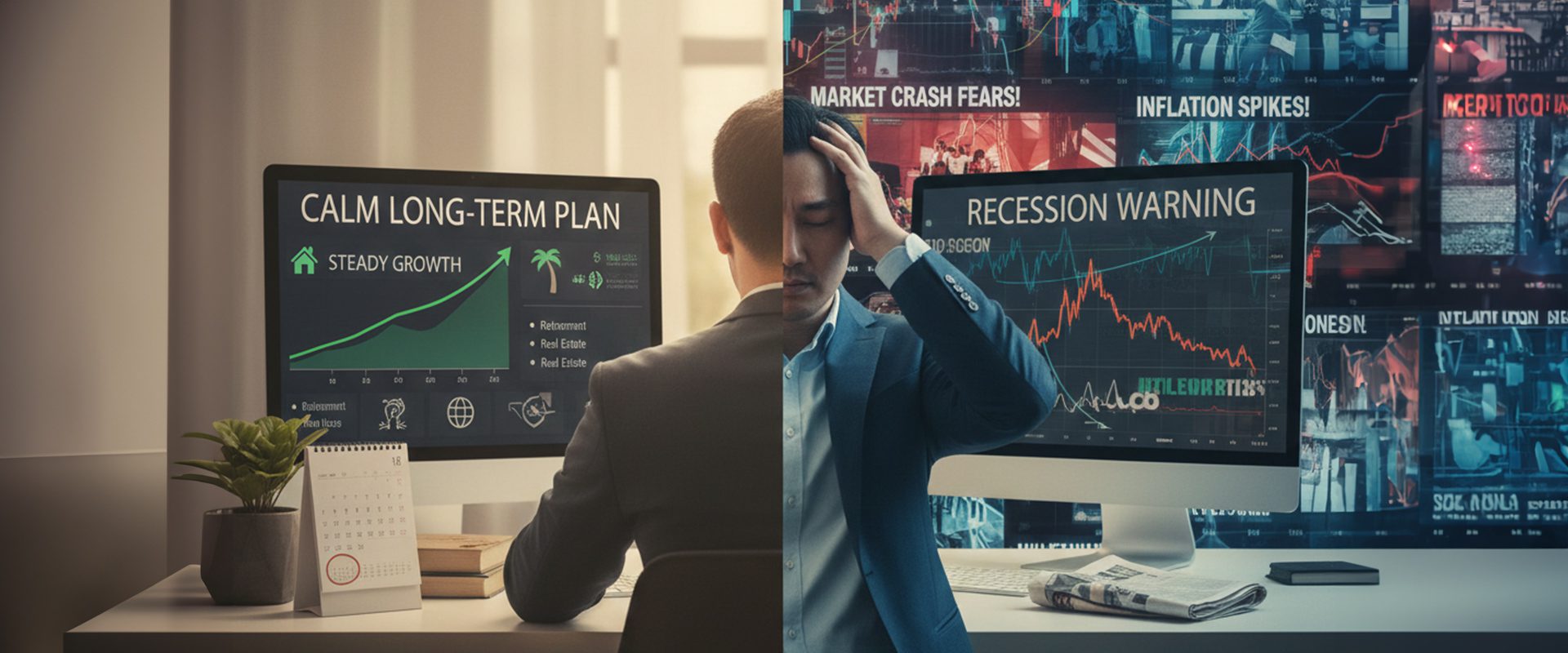
Periods of uncertainty can test even the most experienced investors. In a volatile market, headlines often focus on fear, decline, and worst-case scenarios. This constant stream of negative news can make it difficult to stay calm, stick to an investment plan, and avoid emotionally driven decisions.
Understanding how markets behave and how human psychology reacts under pressure is essential for long-term success, particularly within the Jamaican investment market, where global and local factors can amplify volatility.

Why a Volatile Market Triggers Fear
Market swings are a normal part of investing, yet they rarely feel normal in the moment. Sharp movements can trigger anxiety, especially when media commentary frames short-term fluctuations as permanent damage.
One of the main psychological drivers behind this discomfort is the psychology of loss aversion. Investors tend to feel the pain of losses more strongly than the satisfaction of gains. This imbalance often leads to rushed decisions that undermine long-term outcomes.
The Purpose of an Investment Plan During a Market Downturn
A well-defined investment plan provides structure when emotions are running high. It acts as a reference point, helping investors remember why decisions were made and how they align with long-term goals.
An effective plan typically accounts for:
- Financial objectives and timelines
- Personal risk tolerance
- Asset allocation
- Expected periods of volatility
During a Jamaican investment market downturn, this framework becomes even more important, helping investors distinguish between short-term noise and meaningful change. Read the full post on Financial Security: The #1 Need for Jamaicans in Their Golden Years.
Time Horizon: Maintaining Perspective in a Volatile Market
Your time horizon determines how relevant short-term market movements should be to your decisions. For long-term goals, temporary declines may have little impact on the ultimate outcome.
Investors with longer time horizons often have the capacity to remain invested through downturns. Those approaching a near-term goal may need to review their exposure, but changes should be guided by timing, not fear.
Keeping your time horizon in front of mind helps maintain clarity when markets feel unpredictable.
Read the full posts on Time Horizon and Investment Strategy Part 1 and Time Horizon and Investment Strategy Part 2.
Emotional Mistakes to Avoid During Market Volatility
When anxiety takes over, investors may fall into patterns that harm their progress.
Common emotional reactions include:
- Selling investments to avoid short-term discomfort
- Abandoning a long-term investment strategy
- Monitoring market movements too frequently
- Reacting to headlines rather than fundamentals
Recognizing these tendencies is the first step towards maintaining discipline.
Practical Strategies for Staying Disciplined
Discipline is not passive. It requires clear processes and intentional behavior, especially during periods of uncertainty.
Focus on strategy, not headlines
Headlines are designed to attract attention, not support thoughtful decision-making. A sound investment strategy is built around goals, not predictions.
Reduce exposure to constant market updates
Limiting how often you check market performance can reduce stress and lower the temptation to react unnecessarily.
Review your portfolio with purpose
A review during volatility should focus on alignment with your investment plan and time horizon, rather than short-term performance.
Seek professional perspective
A professional financial advisor can help provide context, reassurance, and clarity when emotions cloud judgement.
Discipline as a Long-Term Advantage
A volatile market does not signal failure or the end of opportunity. It is a natural part of investing and a test of emotional resilience.
By understanding the psychology of loss aversion, relying on a structured investment plan, and staying focused on your time horizon, investors can navigate market downturns with greater confidence and consistency.
Uncertain markets do not require uncertain decisions. Connect with Sterling to discuss how your investment plan can remain steady, even when markets are not.
FAQs
Do market downturns usually last a long time?
Market downturns vary in length, but history shows they are typically temporary. While recovery timelines differ, markets have repeatedly rebounded following periods of decline.
Is holding cash safer during uncertain market conditions?
Holding cash may feel safer, but it can also expose investors to other risks, such as reduced purchasing power over time. The suitability of cash depends on timing, goals, and liquidity needs.
How can I tell if advice I hear in the media applies to me?
General market commentary is not tailored to individual circumstances. Its relevance depends on your financial goals, time horizon, and overall strategy, which is why personalized advice is important.
When is the best time to speak to a financial advisor during volatility?
Many investors find it helpful to speak with an advisor when uncertainty first arises rather than after decisions have already been made. Early conversations can help prevent reactive choices.